Adam Georgiou
|
Nov 16th, 2011
Reminds me of this TED Talk: http://bit.ly/15zhHn
"Emotional alignment" is a perfect term to encapsulate the high level happenings of what successful brands do. Allowing people to mental situate themselves in what your brand's identity represents is how, in my opinion, you build trusting relationships with your followers. If you're inline and resonate positively with my worldview, if you help me, make me laugh, smile, or gasp in a good way, than in turn, I'll help you out, I'll trust you, and probably end up buying stuff from you (if 'you' is a company).
One of my favorite example of this is Red Bull; the quality of the media content they put out is not only on par with production companies that sell their content directly, but often better! And the breadth of `extreme` lifestyles they cover is unparalleled. Sure, this helps them sell energy drinks, but while I do drink Red Bull (maybe one or two a month), I watch free videos on their Facebook stream and website nearly daily. How they end up leveraging this loyalty in the future to make more money is of no concern to me as a follower; as long as they maintain the symbiotic nature or our relationship, I'm a happy dude.
(I also think their media efforts are, in part, an attempt at entering the media market directly, using their energy drink business as a method for bootstrapping. It's kind of funny and amazing how successful they've been too, considering how drinking energy drinks is probably the last thing anyone semi-serious athlete would want to do when participating in their respective sports; but that's not the point...)
Taking the conversation a step further, I think another interesting part of this produced engagement and brand building in general is how these sorts of things come together on a low level.
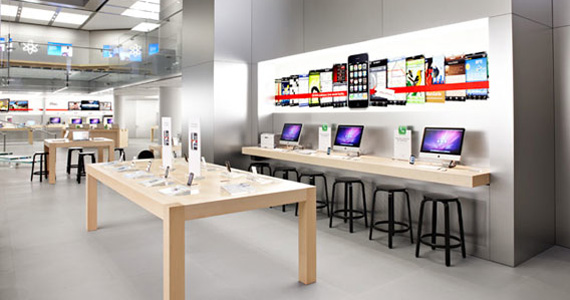
There's a saying that goes something like, "The whole is greater than the sum of the its parts." Apple is case study of such a concept...
There have been a massive amount of articles lately talking about how Steve Jobs's visionary status was an artifact of his attention to detail (largely augmented by his (company's) seemingly inhuman ability to simultaneously get products out the door without sacrificing quality; many can do one or the other, few can do both). I read a story somewhere talking about how, during the first generation iPod's development, he was insistent on making the proposed prototype smaller. When the engineer presenting it to him protested that it couldn't be done, Jobs dropped the literally one-of-a-kind device into a fish tank he had in his office. He then pointed at the escaping air bubbles and said something to the effect of 'There's still room in there. Make it smaller.' (Source: http://bit.ly/tEtyuZ). Another time he called a colleague at Google on a Sunday to get the ball rolling on the 'urget issue' of the second 'o' in Google's logo being the wrong color on the iPhone. (Source: http://bit.ly/vmzCOT). Alone these details may not mean much, some might even consider them negligible corner cases, but combined they define the very perfection that Apple's followers care about and in turn they form one of the most cohesive brands ever built and .
(Zappos.com also comes to mind, but I'll leave that for another day; for now I'll just plug Tony Hsieh's book, "Delivering Happiness". Check it out.)
Bringing it back to hospitals: traditionally, branding is usually thought of in the context of making money, but it can do so much more than that! Actually, I think our collective start at (partially) decoupling branding from earnings metrics is why branding has flourished so much lately (e.g. Zappos.com not worrying whether or not spending money on 24/7 domestic customer service is good for their short term bottom line or not, because it's more important for them to stick to their company morals). And almost paradoxically, I think these better brands end up making more money! With that in mind, it gets you to thinking about organizations who who traditionally wouldn't make an effort to brand themselves (e.g. hospitals) and what you find is there's a ton of low hanging fruit out their (as illustrated in the TED talk above)!
So much potential...
(Sorry if this is too much of a rant and all over the place, but I'm at work and only had time to type a few sentences at a time.)
Mark Shipley
|
Nov 16th, 2011
Adam, Thank you very much for putting so much into this comment. And thanks for reminding me about this great ted talk. We had a creative briefing / brainstorming session today in which we were discussing this very subject - how we can make small, incremental changes in the hospital environment to expand the the brand presence and improve the patient experience. I had seen this talk a while back, but will be sure to share it with the creative team as we contemplate our next moves.
Adam Georgiou
|
Nov 16th, 2011
Gotta' love the internet; keeping the conversation going, one comment | video | podcast | etc. at a time. ;)